Two species.
Named suppliers.
No vague claims.
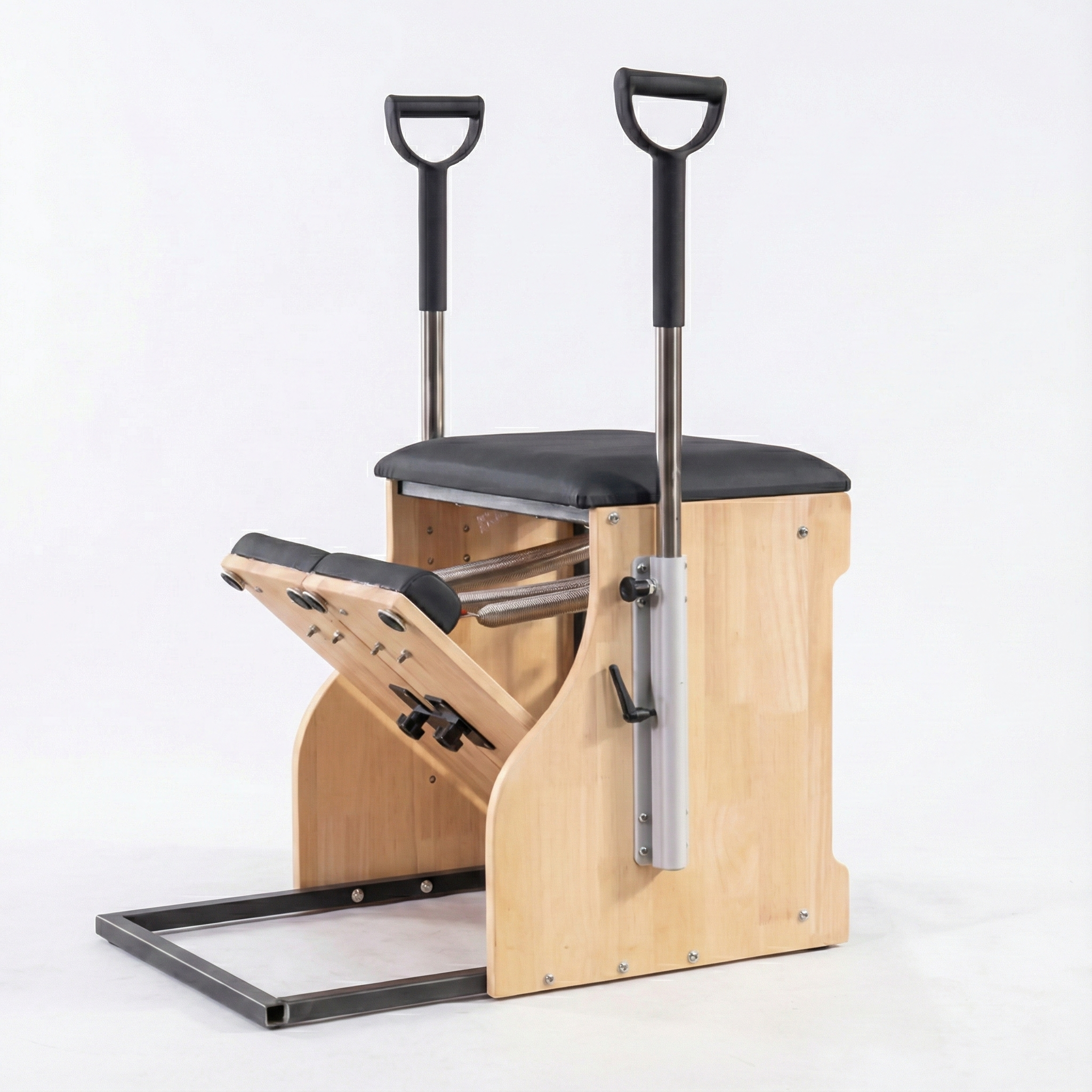
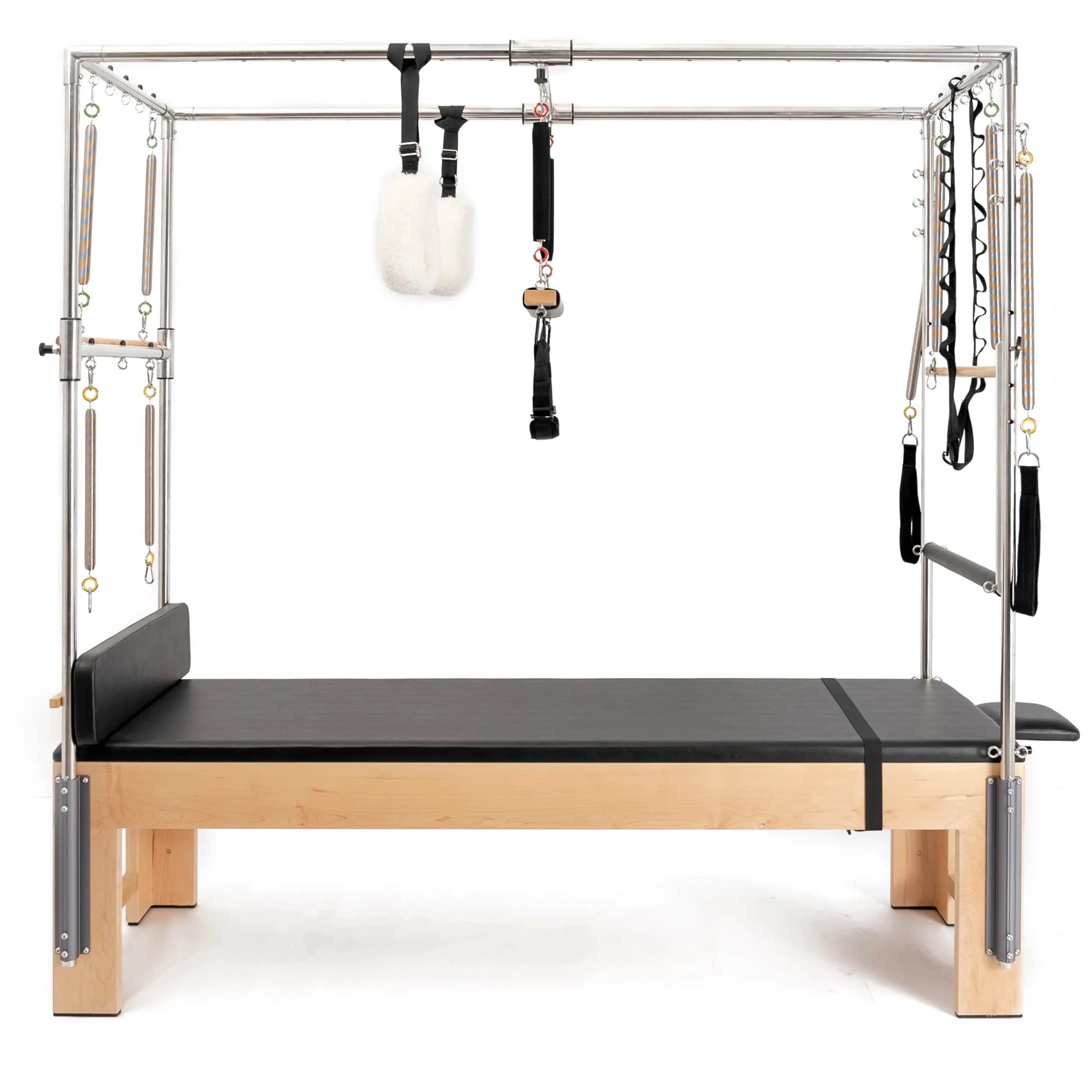
Every Oshun frame is built from solid American Maple or solid Thai Oak — never veneer, never particleboard. This page explains where that timber comes from, why we chose these two species for commercial Pilates equipment, and how we select it, so "American Maple" and "Thai Oak" are more than words on a product page.
Questions on a Specific Order hello@oshun-studios.com
+1 (332) 877-4477
Response Window Two business days, the same standard used across our site.
Registered Office 8735 Dunwoody Place STE R
Atlanta, GA 30350, USA
We chose Maple and Oak for what a studio floor actually does to furniture, not for how a spec sheet reads.
A commercial reformer is climbed onto, slid across, and loaded unevenly dozens of times a day, six or seven days a week. That rules out most decorative hardwoods and every composite board. American Maple and Thai Oak are both closed-grain, high-density hardwoods with a long working history in equipment and flooring that takes repeated mechanical stress — which is the actual reason they appear on every Oshun product page, not a marketing preference.
We offer exactly two species so that every claim we make about them is one we can stand behind in detail, rather than offering a longer list of woods we know less well. Studio owners choose Maple or Oak based on color and the look of their space; either one is graded to the same commercial-use standard before it enters production.
We are not a lumber company, and we do not claim to run our own forestry operation. What we do control, and what this page describes, is who we buy from, what we ask them to confirm, and what happens to timber once it reaches our shop.
Stated in specific, checkable terms — species, origin region, and why it holds up.
American Maple
Hard (sugar/rock) maple is the same species long used in gymnasium flooring and bowling lanes, chosen for its tight, even grain and resistance to denting under repeated point-loading — the same stress a reformer's carriage and jump board see in daily class use.
We buy from North American hardwood suppliers who cut and kiln-dry to furniture and flooring grade; we do not source Maple through intermediaries who cannot tell us the region or mill it came from.
Thai Oak
Oak sourced from Thailand gives studios a warmer, more open grain option than Maple, while still meeting the density and stability we require for commercial equipment rather than residential furniture.
Because this species is imported, every shipment is subject to US customs entry requirements and the plant-product import declaration described in the section below — this is not optional paperwork we skip for a faster build.
Four checks, on every batch, before it enters production.
Moisture content
Kiln-dried to a stable moisture range so frames do not warp or crack as a studio's climate control cycles through the year.
Grain & density
Boards are inspected for tight, consistent grain and checked for the density a commercial frame needs; softer or inconsistent stock is rejected for reformer use.
Structural defects
Checked for knots, checking, and insect damage that would compromise a rail or frame under repeated load, not just for surface appearance.
Paper trail
Supplier invoices and, for imported Thai Oak, customs entry records are kept on file against each production batch.
Imported Oak enters the US the same way any legally sourced timber does — declared, not assumed.
Thai Oak is a regulated plant product at the US border. We do not treat that as a formality to clear quickly; it is the mechanism that ties every shipment back to a specific supplier and species before it ever reaches our shop.
-
Lacey Act plant declarationImported Thai Oak shipments require a US plant-product import declaration identifying species and country of harvest, filed with US Customs and Border Protection under the Lacey Act.
-
Supplier-level documentationWe buy Thai Oak from mills that provide shipment-level documentation of species and origin; we do not purchase undocumented lots to save time or cost.
-
US Customs entry on every shipmentEvery import is processed through standard US customs entry; nothing enters our supply chain outside that process.
We would rather say "we don't know that" than print a word like "sustainable" without backing it up.
The US Federal Trade Commission's Green Guides set out how environmental marketing claims need to be qualified and substantiated. We apply that standard to our own wood sourcing language below, even where it means saying less than a competitor might.
What We State
American Maple and Thai Oak, specific species from named supplier regions, selected for commercial durability and inspected for moisture, grain, and defects before use — exactly as described on this page and on each product's build sheet.
What We Do Not Claim
We do not currently hold a third-party forest-management chain-of-custody certification (such as FSC or PEFC) for either species, and we do not describe our timber as "certified sustainable" or "carbon neutral." If that changes, we will update this page and name the certifying body directly.
Country-of-Origin Accuracy
Because a single reformer combines American Maple or Thai Oak with German or South Korean steel springs and US final assembly, we describe origin by component rather than using an unqualified "Made in USA" claim, consistent with FTC Made in USA labeling guidance.
If a Claim on Our Site Ever Looks Wrong
If any product page, ad, or this statement appears to overstate our sourcing practices, tell us. We would rather correct language on our own site than have a customer discover a gap between what we said and what we can back up.
This section describes our current sourcing practices and marketing standards; it is general information, not a formal environmental certification, and not legal advice. Practices are reviewed periodically and this page is updated when they change. For a specific question, contact us at hello@oshun-studios.com.
The most honest environmental claim we can make is that a solid-wood frame doesn't need replacing.
Built to outlast a studio lease
Solid Maple and Oak frames, backed by our 10-year structural warranty, are built to stay in service through years of daily class use rather than being replaced when a laminate or composite frame delaminates.
Solid wood can be repaired, not just replaced
A solid hardwood frame can typically be sanded, refinished, or have a single component replaced under our warranty terms, rather than requiring the entire unit to be discarded over cosmetic wear.
No unsold inventory sitting in a warehouse
Because every frame is cut and finished only after an order is placed, as described on our About Us page, we do not hold speculative finished stock that risks going unsold.
The rest of how we build and stand behind a reformer.
Want the sourcing detail for a specific order?
Tell us your order number or the batch you're asking about, and we will point you to the supplier and documentation behind that specific frame.
+1 (332) 877-4477 · hello@oshun-studios.com
Monday–Friday, 9:00 AM–5:00 PM ET